


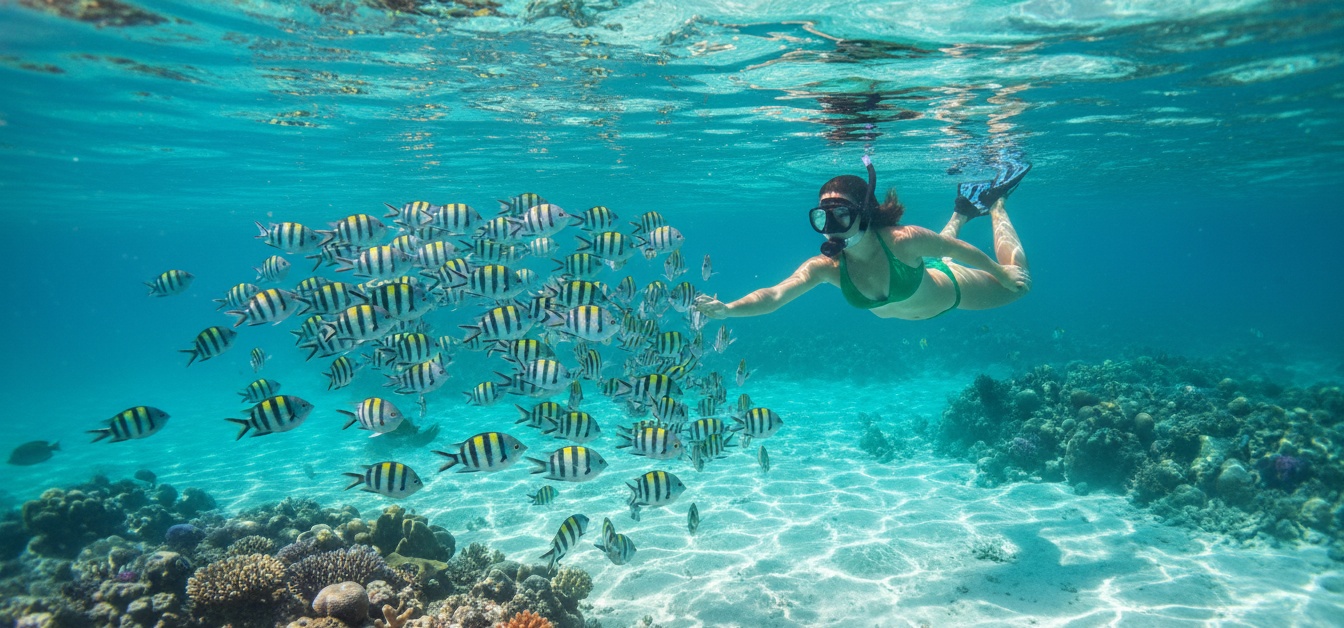
The best places to snorkel in Cabo San Lucas aren’t hidden. They’re right in front of you, glowing blue, almost teasing you to jump in. The water here has that mix of calm and energy that makes you want to stay all day. It’s one of those rare spots where you can grab your mask, walk a few steps, and be swimming through a postcard.
Why Cabo San Lucas Is Famous for Snorkeling
It’s hard to talk about Cabo without mentioning the water. The Pacific and the Sea of Cortez meet here, creating something special. Warm currents, cool depths, coral gardens that just keep rebuilding themselves. On a clear morning, visibility goes deep enough to spot stingrays resting in the sand far below.
What’s nice is how accessible everything is. You don’t need a guide or a long boat ride. Just step into the shallows, and you’ll start seeing flashes of color below you. It’s that easy.
One of our team members, grew up near Medano Beach. He still laughs about the time he thought a school of sardines looked like silver confetti underwater. He said he reached out to grab one and ended up floating there for twenty minutes watching them shift shape like smoke.
That’s Cabo. Simple, quiet moments that stay with you.
Top Places to Snorkel in Cabo San Lucas
Chileno Bay
Let’s start with Chileno Bay, probably the most loved spot in Cabo. It’s easy to find, safe for kids, and calm enough to float for hours. The reef sits close to the shore. You’ll see parrotfish, blue tangs, and maybe a small ray if you’re lucky.
This bay is a marine protected area, so no feeding the fish or stepping on coral. Use reef-safe sunscreen, the real kind, not the “eco” stuff that still has chemicals. Tours with Dive Cabo or La Isla Tour are reliable. They usually include gear, snacks, and sometimes a few underwater photos.
If you find yourself thinking you could get used to mornings here, you might want to look into Chileno Bay real estate. People do.
Santa Maria Bay
Next is Santa Maria Bay, a quiet crescent-shaped beach just up the highway. It’s protected on both sides by rocky cliffs, so the current stays soft. The water’s crystal clear, the sand white, and there’s usually a lifeguard on duty.
This one’s a favorite for families because you can snorkel right from the sand. It’s simple: walk in, put your mask on, and you’re surrounded by coral and tropical fish.
Guided tours from Cabo Trek or Whale Watch Cabo often stop here. They care about marine life, which matters more than most people realize. The tours are small, easygoing, and no one rushes you.
Pelican Rock and Land’s End
This one feels different. Pelican Rock sits close to the famous Arch at Land’s End. You can’t reach it from the beach; you’ll need a short boat ride from Medano. But that’s part of the fun.
Once you’re there, it feels like you’ve left the world behind. The rock formations rise out of the water like sculptures. Below, everything moves fast, schools of sergeant majors, flashes of yellowtail, sea lions darting through bubbles.
If you go with Cabo Day Trips or Dive Cabo, you’ll have guides who know the current and the best visibility spots. This is where we send experienced swimmers or anyone who wants something a bit more wild.
Palmilla Beach
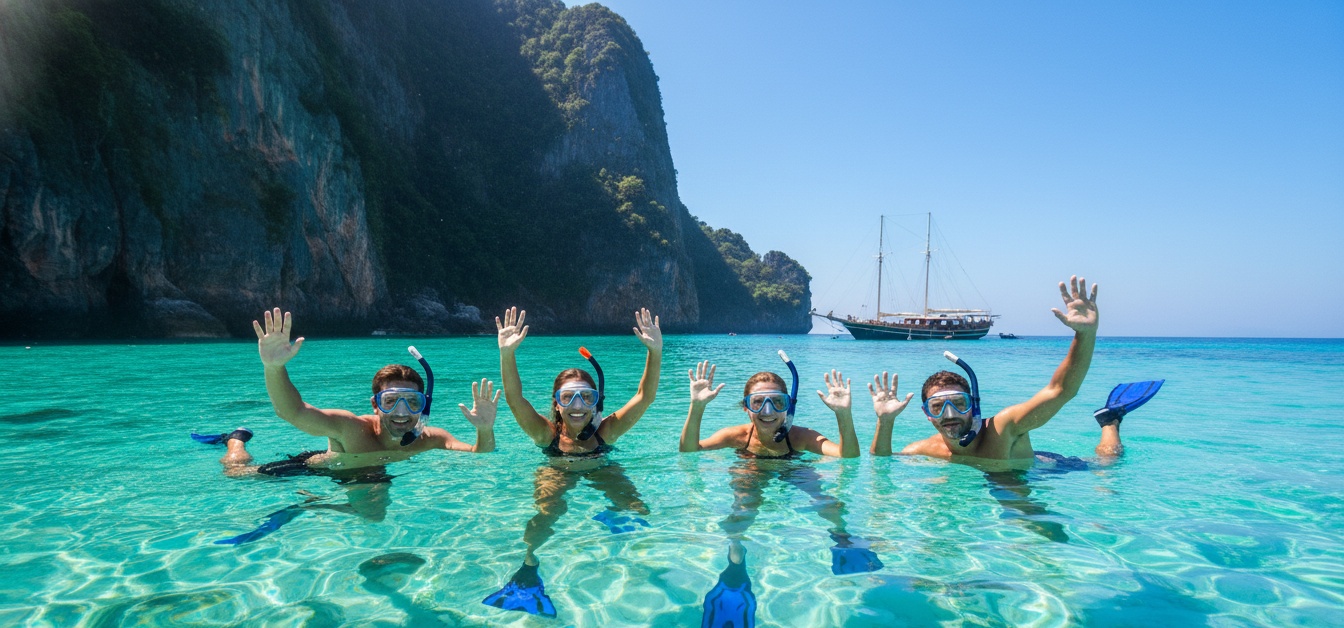
Head toward San José del Cabo and you’ll find Palmilla Beach. The first thing you’ll notice is how still it feels. No strong waves, no chaos. It’s the kind of beach where people bring kids, snacks, and stay until the light turns gold.
The reef is close, and you can see fish right under your fins. If you forget your gear, local vendors usually rent out masks and fins for cheap.
After your swim, drive a few minutes and check out Tortuga Bay San Jose del Cabo. It’s calm there too, with walking paths and views that feel like the old Baja before the big hotels.
Cabo Pulmo (Advanced / Day Trip)
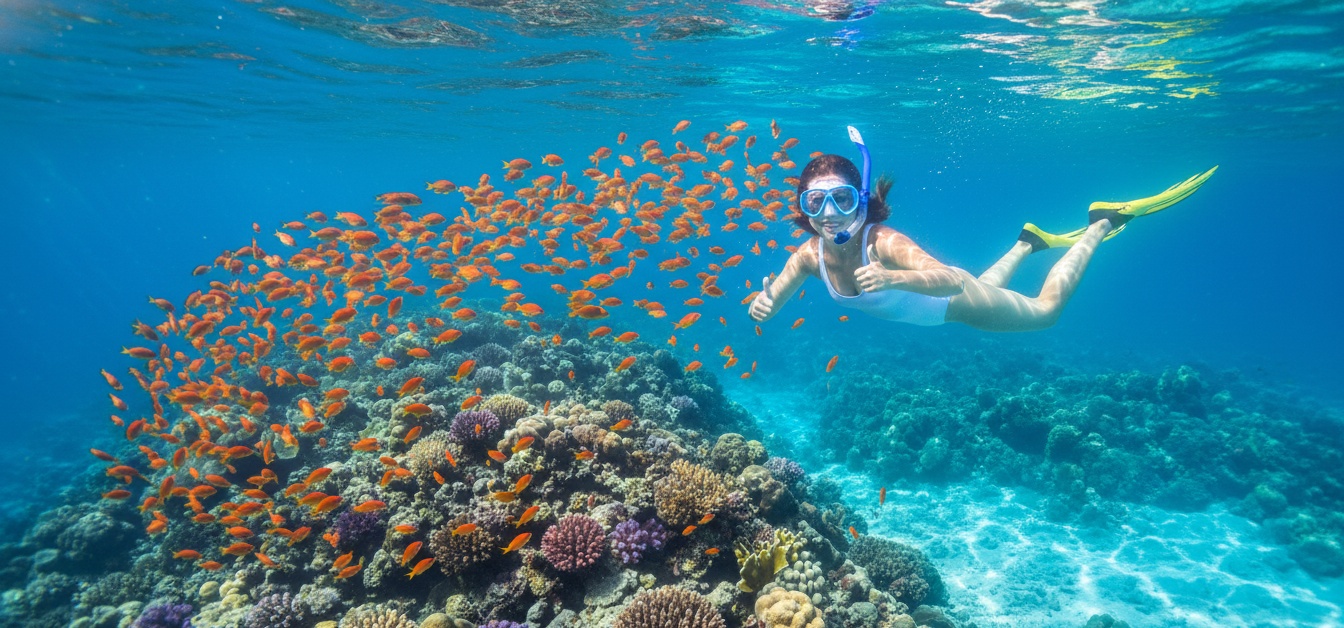
And then there’s Cabo Pulmo. You’ll need a full day and a bit of patience to get there, but it’s worth it. This is one of the oldest coral reefs in North America, and it’s alive with movement: schools of jackfish, turtles, and reef sharks.
It’s a protected park, part of UNESCO’s World Heritage list, and it’s carefully managed. The best way to go is through Dive Cabo or Cabo Trek. They handle everything, including permits, gear, and lunch.
This spot isn’t for beginners. The current can surprise you, and visibility shifts fast. But when it’s good, it’s unforgettable.
What to Expect and Tour Tips
Most snorkeling trips in Cabo cost between $45 and $120 per person. That usually includes gear, snacks, water, and sometimes photos. Private tours or catamaran cruises cost more, but you get more space and quiet.
The best visibility? Late spring and early fall. Summer brings warmer water. Winter can be crisp and windy but still clear.
Bring a towel, water shoes, and sunscreen without oxybenzone. You’ll thank yourself later.
If you’re going alone, Chileno and Santa Maria are the easiest to access by car. There’s parking and bathrooms at both. For Pelican Rock, you’ll need a boat, and there are dozens waiting along Medano Beach every morning.
And don’t rush. Spend time floating. You see more when you stop moving so much.
Local Snorkeling Tours Worth Trying
A few names always come up among locals:
Dive Cabo – Small groups, friendly guides, great equipment.
Cabo Trek – Eco-minded tours with marine biologists leading the way.
La Isla Tour – Flexible, family-friendly, less crowded.
Whale Watch Cabo – Combines marine life watching with reef stops.
Cabo Day Trips – Catamarans, music, drinks, and snorkeling mixed in.
We’ve seen all of them at work over the years. They care about safety and the ocean, and that’s what matters most.
Conservation and Responsible Snorkeling
Cabo’s reefs are old and fragile. One misplaced fin kick can snap coral that’s been growing for decades. A few small habits can keep the ocean healthy:
- Use real reef-safe sunscreen.
- Don’t feed or touch anything underwater.
- Pick smaller tours.
- Float instead of standing on coral.
Locals take pride in keeping these waters clean. We do too. Most of us at Baja Properties spend weekends at these same beaches. It’s part of why this work feels personal.
FAQ About Places to Snorkel in Cabo San Lucas
Where are the best places to snorkel in Cabo San Lucas for families?
Chileno Bay and Santa Maria Bay. Calm, safe, and easy to reach.
What months offer the best visibility?
Late April to October. You’ll get warm water and bright days.
Do tours include gear and photos?
Most do. Some even share pictures right after the trip.
Is snorkeling at Pelican Rock good for beginners?
Not really. It’s better for strong swimmers. Start at Chileno or Palmilla.
Can I snorkel off the beach?
Yes. Chileno, Santa Maria, and Palmilla are all great from shore.
What fish can I expect to see?
Tropical species like butterflyfish, parrotfish, and rays. Occasionally turtles.
Are there eco-friendly snorkeling companies?
Yes. Cabo Trek and Dive Cabo both focus on sustainability.
How much do tours cost?
Usually between $45 and $120 per person depending on time and extras.
Is Palmilla Beach good for kids?
Yes. Gentle waves, sandy bottom, very easy entry.
How do I book a snorkeling tour?
You can reserve online or walk along Medano Beach and talk to operators in person.
If you’re planning a trip or thinking about living near the best places to snorkel in Cabo San Lucas, our team at Baja Properties can point you in the right direction. We live here. We know which beaches stay quiet in high season and which homes sit closest to the water.
Call us at (619) 819-5177 or visit bajaproperties.com. We’ll help you find your place near the sea.